

Greece
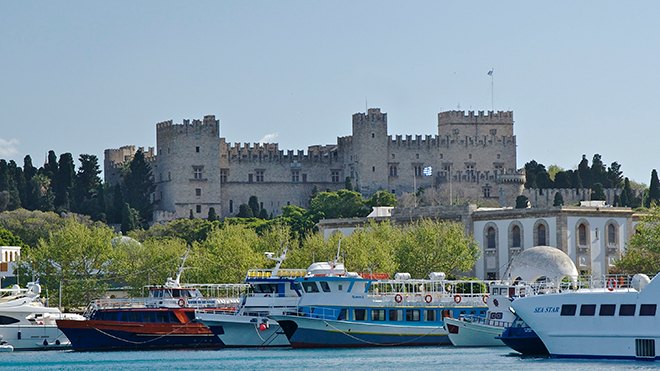
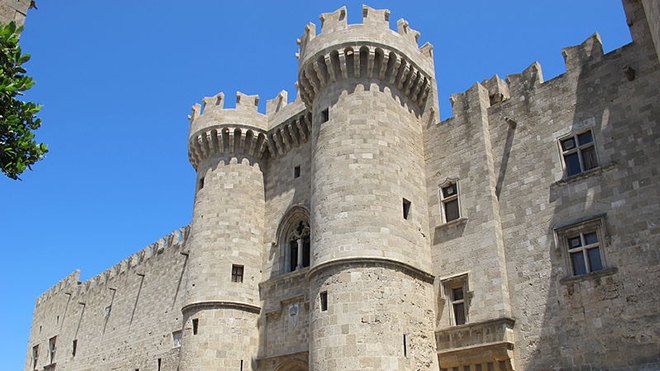
The most important monument of the era of the Knights in Rhodes, is the Palace of the Great Magistrate. During the 1930’s, while under Italian occupation, the building acquired its modern form, being the commanding center as well as the house of the Italian Commander. The mosaic floors of the floor are amazing.
The most important monument of the era of the Knights in Rhodes, is the Palace of the Great Magistrate. During the 1930’s, while under Italian occupation, the building acquired its modern form, being the commanding center as well as the house of the Italian Commander. The mosaic floors of the floor are amazing.
In a part of the ground floor of the Palace, in consecutive rooms, the permanent exhibition of EBA entitled «Rhodes from the paleochristianic times until Turkish occupation (1522)» is housed. In this exhibition, you can see various findings of the digs that took place in the Medieval Town (ceramics, sculptures, murals, portable pictures, small scale art works etc.)
The permanent exhibition of EBA entitled «Rhodes from the paleochristianic times until Turkish occupation (1522)» was formed in 1993, and was housed in the ground floor of the Palace.
The exhibits were organized as follows: Introduction room (from ancient ideology to christianic), Economy, Daily Life, Defense – Government, Cultural Life, Religion – Art, Architecture.
The units are accompanied by extensive explanatory documents, as well as drawings of explanatory material, which enlighten some sides of the objects ant compose the historical data and the evolution of the city during the time from 4th century BC to the beginning of the Turkish rule.
The Cretaquarium gives the chance to its visitors for a unique «dive» to the wonderful sea world of the Mediterranean.
The Archaeological Museum of Lemnos is in Myrina, at the location Romeikos Gialos. The exhibition aims to letting the visitor follow, through the exhibits and the visual material, the history of Lemnos from the Copper era to the Middle Ages, and to understand the island’s importance in the wider area of North Aegean Sea.
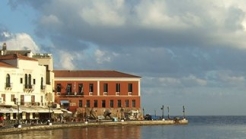
The fishery museum Kolymbari is an area which has been created by the company grassroots emergence of marine wealth and fishing tradition, whose shareholders are the State Government of Chania,



GNTO Registry Number: 1039Ε60000070000
Number GE.MI. 118062927000