

Greece
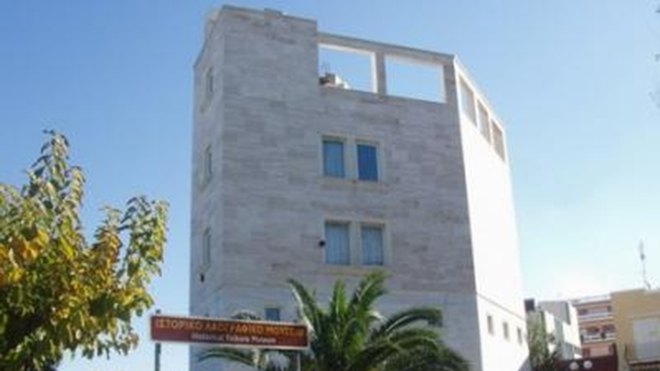
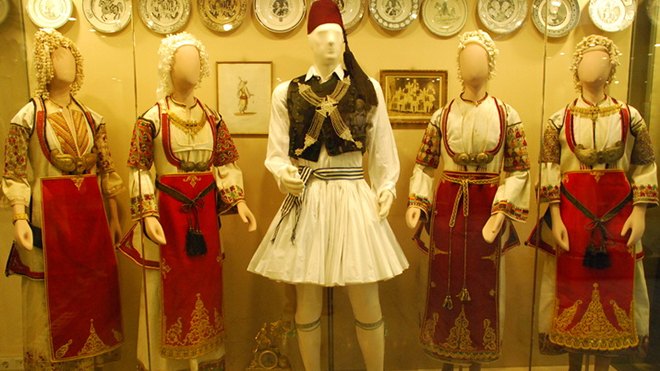
The Folkloral museum of Corinth was founded in 1976, in order to locate, maintain and exhibit folkloral material. The extended collections contain women’s and men’s outfits from many parts of Greece, as well as other handicrafts.
www.yppo.gr/1/g1540.jsp?obj_id=3269
The Folkloral museum of Corinth was founded in 1976, in order to locate, maintain and exhibit folkloral material. The extended collections contain women’s and men’s outfits from many parts of Greece, as well as other handicrafts.
The three storey building is located in a central spot of the city of Corinth, surrounded by a square, in which a bust of the founder has been erected. On the ground floor, the agricultural life og the Corinthian area is presented, through rich material showcasing tools for the basic plantations, samples of houses, houseware and other articles. In the middle floor, you can find a collection of rural furniture of the 19th century, as well as a library with books of the 17th, 18th and 19th century. These are all offerings of the family of the writer Asteris Kovvatzis.
The Museum organizes events in cooperation with Local Authorities, as well as various publications. Through these activities, the Folkloral Museum of Corinth traces back the origins from the historic past of Greece, perceptions and affirmations of the social, financial, cultural situations during the last three centuries.
The museum’s exhibits allow the public to have a critical approach to the artistic, and aesthetic pursuits and practical adaptations of the Greek person of the last two centuries.
<span style="\"font-size:" medium;\"="">
The Printing Museum is located in Chania, just outside the town, in Craft Park Souda Bay and a vision of life founder,Yannis Gieredaki, founder and publisher of the journal "Haniotika Nea".

The Inscription Museum is unique in Greece, and the largest of its kind in the world. In it there are 13.536 inscriptions, mostly written in Greek. Chronologically, they cover the times from the first historic times to the paleochristianic, and most of them come from Greece.
The Museum of the History of the Greek Costume is a museum with a vestiary content. In its collection one can find 25.000 objects, especially costumes and jewellery of the historic greek area, copies of Minoan, archaic and byzantine costumes, as well as 23 porcelane dolls dressed in traditional outfits.



GNTO Registry Number: 1039Ε60000070000
Number GE.MI. 118062927000